



Blog
Chair Rail Ideas: 10 Ways to Use Chair Rail in Any Room


The best chair rail ideas pair the rail with something on the wall: two paint colors, wainscoting or panels below, or wallpaper above. Set the rail at about one third of the wall height, usually 32 to 36 inches on an 8 ft ceiling, and choose a slimmer profile for small rooms and a bolder one for large, tall rooms.
Chair rail is the horizontal moulding that runs around a room at about waist height. It was first used to stop chair backs from marking the walls, and it still does that job in dining rooms and hallways. Today it is just as often used to split a wall into two parts, so you can change the paint, the texture or the material at the line. Here are ten ways to use it, with the profiles we stock for each one. If you are new to the term, our guide to chair rail vs picture rail explains where each one belongs.
10 chair rail ideas for any room
1. Two-tone walls, darker below the rail
The simplest idea is also one of the most effective: paint the wall below the chair rail a darker color than the wall above. The darker lower wall hides scuffs, grounds the room and makes the ceiling feel higher. Paint the rail itself in the trim color, or in the lower wall color for a calmer, more modern look.
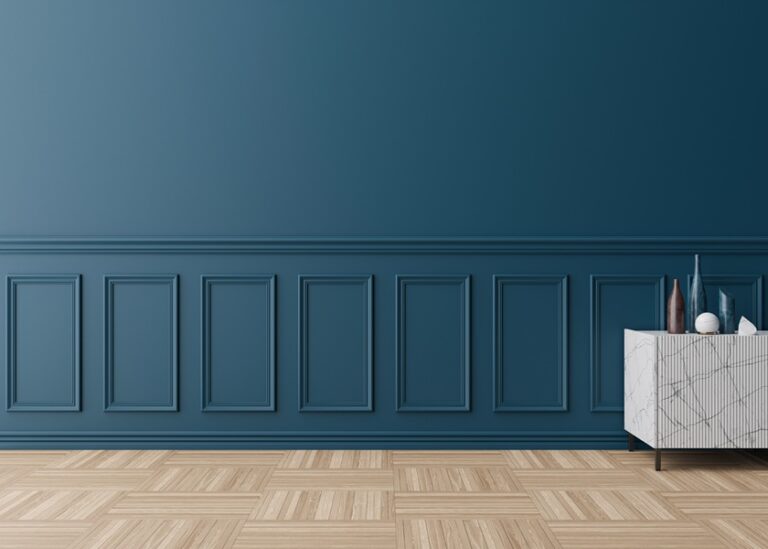
2. Chair rail over picture-frame wainscoting
Picture-frame wainscoting is a set of moulding frames below the chair rail, painted the same color as the wall and rail. It is the classic dining room look, and it costs far less than solid wood paneling. Use a panel moulding such as MC130 Cody Panel Mold for the frames and keep the gaps between them equal. Our wainscoting guide shows how to lay the frames out.
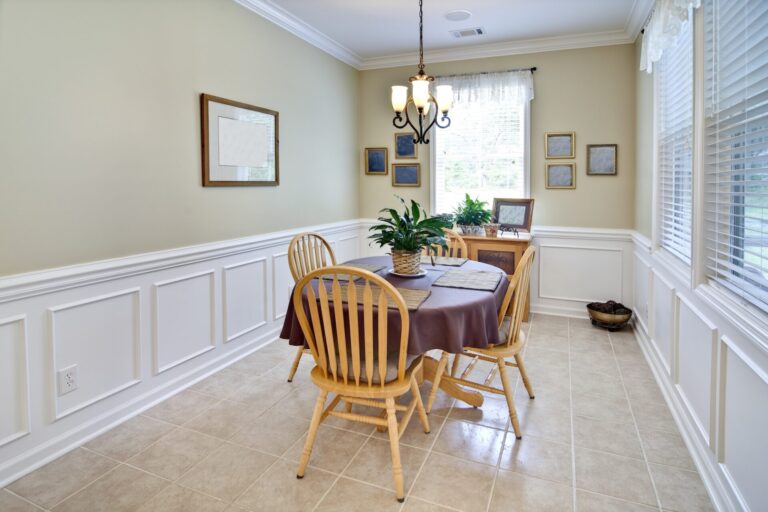
3. Chair rail on top of beadboard or V-groove
Beadboard and V-groove panels below a chair rail suit cottages, farmhouses, bathrooms and mudrooms. Here the chair rail works as a cap, covering the raw top edge of the panels, so choose a profile deep enough to cover their thickness, or use a wainscot cap. We stock beadboard panels and T&G V-groove, and our guide to beadboard vs V-groove compares the two.
4. Board and batten with a chair rail cap
Board and batten below a chair rail gives a room a crisp, modern farmhouse look. Flat battens run up the wall at even spacing and the chair rail caps them along the top. Our board and batten calculator works out the batten spacing and how many boards you need.
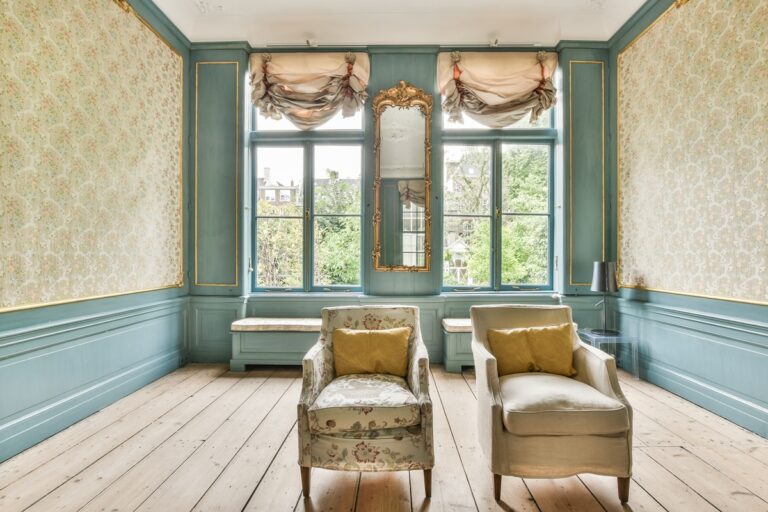
5. Wallpaper above or below the rail
Chair rail makes a natural border for wallpaper. Put a patterned paper above the rail and paint below it, or use a hard-wearing paper below the rail in a hallway and a plain painted wall above. The rail hides the edge of the paper, so there is no need for a separate border.
6. A slim chair rail for small rooms
In a small room or a room with a low ceiling, a large chair rail can make the walls feel busy. Choose a slimmer profile around 2 to 2 1/2 inches tall, such as MC391 Grey Bull, 2 1/8 inches or the low-profile MC399 Tallac, and paint it close to the wall color so it adds detail without breaking the room up. Our trim ideas for low ceilings and small rooms has more tips.
7. A bold, built-up chair rail for large rooms
Large rooms with tall ceilings can carry a heavier rail. A wider profile such as MC298 Monterey, 3 1/2 inches or the deep MC36 Lancaster, 1 3/16 by 3 3/16 inches reads clearly from across the room and balances tall baseboard and large crown moulding.
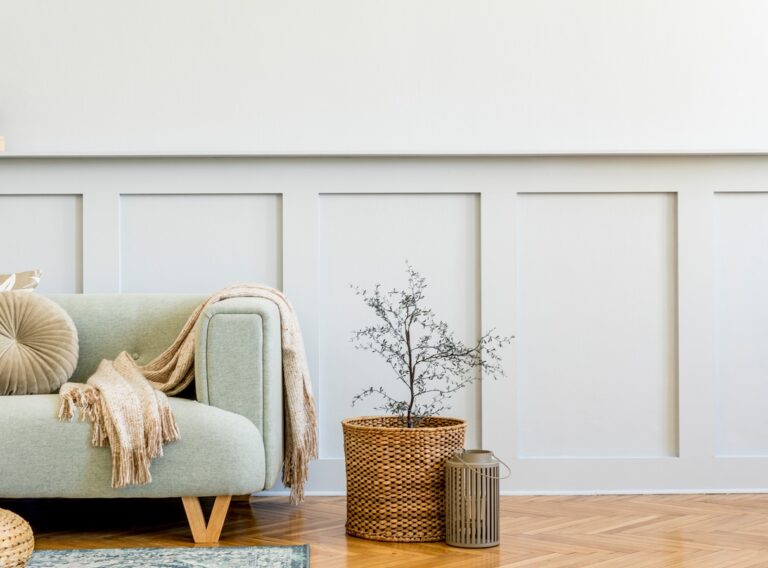
8. A modern, flat chair rail
For a modern room, skip the curves. A square-edged flat board, or a simple low profile, with flat panels or plain paint below gives a clean, minimal line. Many modern designs paint the rail, the panels and the wall in one color so the rail shows only as a shadow line. Flat 1x boards work well for this look.
9. Chair rail in hallways and up the stairs
Hallways and stairways take the most knocks from bags, furniture and hands, which makes them a practical place for chair rail. On a staircase, run the rail parallel to the line of the stairs so it stays the same height above each step, and turn it level again at the landing. Our stair trim guide covers the other parts of a stair.
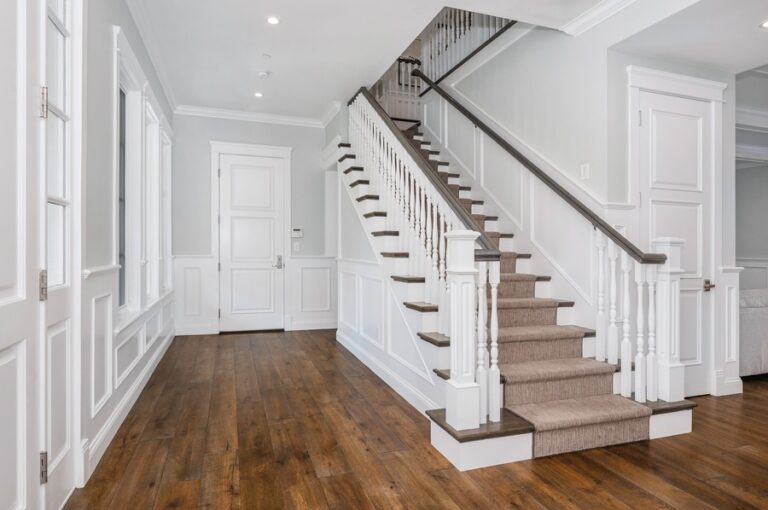
10. A stained wood chair rail
A stained chair rail suits Craftsman and traditional homes with stained doors, floors or cabinets. MC390 Spokane comes in alder, maple, red oak, poplar and solid pine, and MC36 Lancaster comes in alder, maple, red oak and poplar, so you can match the wood around it. Our guide to painted vs stained trim helps you decide.
How high should a chair rail be?
A good rule is to set the chair rail at about one third of the wall height, measured from the floor to the top of the rail. That keeps the wall in pleasing proportions and lines up with the backs of most dining chairs.
| Ceiling height | Chair rail height (top of rail) |
|---|---|
| 8 ft | 32 to 36 inches |
| 9 ft | 36 to 40 inches |
| 10 ft | 40 to 42 inches |
If the room has wainscoting, the rail sits at the top of the panels, so plan both together. Our full guide to chair rail moulding goes into height in more detail.
Chair rail profiles we stock
Every profile below is listed as thickness by height.
| Profile | Size | Wood | Good for |
|---|---|---|---|
| MC391 Grey Bull | 3/4″ x 2 1/8″ | Primed finger joint pine | Small rooms, low ceilings |
| MC399 Tallac | 9/16″ x 2 1/2″ | MDF | A slim, low-profile rail |
| CH001 Byron | 1 5/8″ x 2 1/4″ | Primed finger joint pine | A deep rail with strong shadow lines |
| MC35 Lancaster | 1″ x 2 1/2″ | Primed finger joint poplar | Traditional dining rooms |
| MC390 Spokane | 11/16″ x 2 5/8″ | Six woods, paint or stain | Matching stained trim |
| MC297 Carmel | 11/16″ x 3″ | Primed finger joint pine | Picture-frame wainscoting |
| MC36 Lancaster | 1 3/16″ x 3 3/16″ | Alder, maple, MDF, red oak, poplar | Large rooms, tall ceilings |
| MC298 Monterey | 5/8″ x 3 1/2″ | Primed finger joint pine | A bold rail in large rooms |
To see how a profile looks with your wall color, try the chair rail options in our Room Visualizer.
How much chair rail do you need?
Measure the length of each wall at chair rail height, subtract door openings and any wide openings without a rail, then add about 10 percent for corner cuts and waste. Chair rail runs around the room the same way baseboard does, so the Baseboard tab of our trim calculator works for it too.
See chair rail in person. Visit any of our four showrooms in the Bay Area and Sacramento, where 4 inch samples are available, or call us at 925-798-7525, and we will help you choose a profile for your room. Find your nearest showroom.
Frequently Asked Questions (FAQs)
Set the top of the chair rail at about one third of the wall height. On an 8 ft ceiling that is 32 to 36 inches from the floor, on a 9 ft ceiling 36 to 40 inches, and on a 10 ft ceiling 40 to 42 inches. If you have wainscoting, the rail sits on top of the panels.
No. Chair rail is still widely used, but the look has changed. Instead of a lone rail on a plain wall, today it is usually paired with two-tone paint, wainscoting, board and batten or wallpaper, and modern rooms use simpler, flatter profiles.
Either works. Painting the rail in the trim color makes it stand out as a detail. Painting it the same color as the wall, or the same color as the lower wall, gives a calmer, more modern look where the rail shows mainly as a shadow line.
Yes. Choose a slimmer profile around 2 to 2 1/2 inches tall, such as MC391 Grey Bull, and paint it close to the wall color. A light color below the rail also keeps a small room from feeling closed in.
Paint in a darker or contrasting color, picture-frame wainscoting, beadboard or V-groove panels, board and batten, or a hard-wearing wallpaper. In hallways and dining rooms, a scrubbable finish below the rail makes the wall easier to clean.