



Blog
Sheet Goods Explained: Luan, MDF and Extira

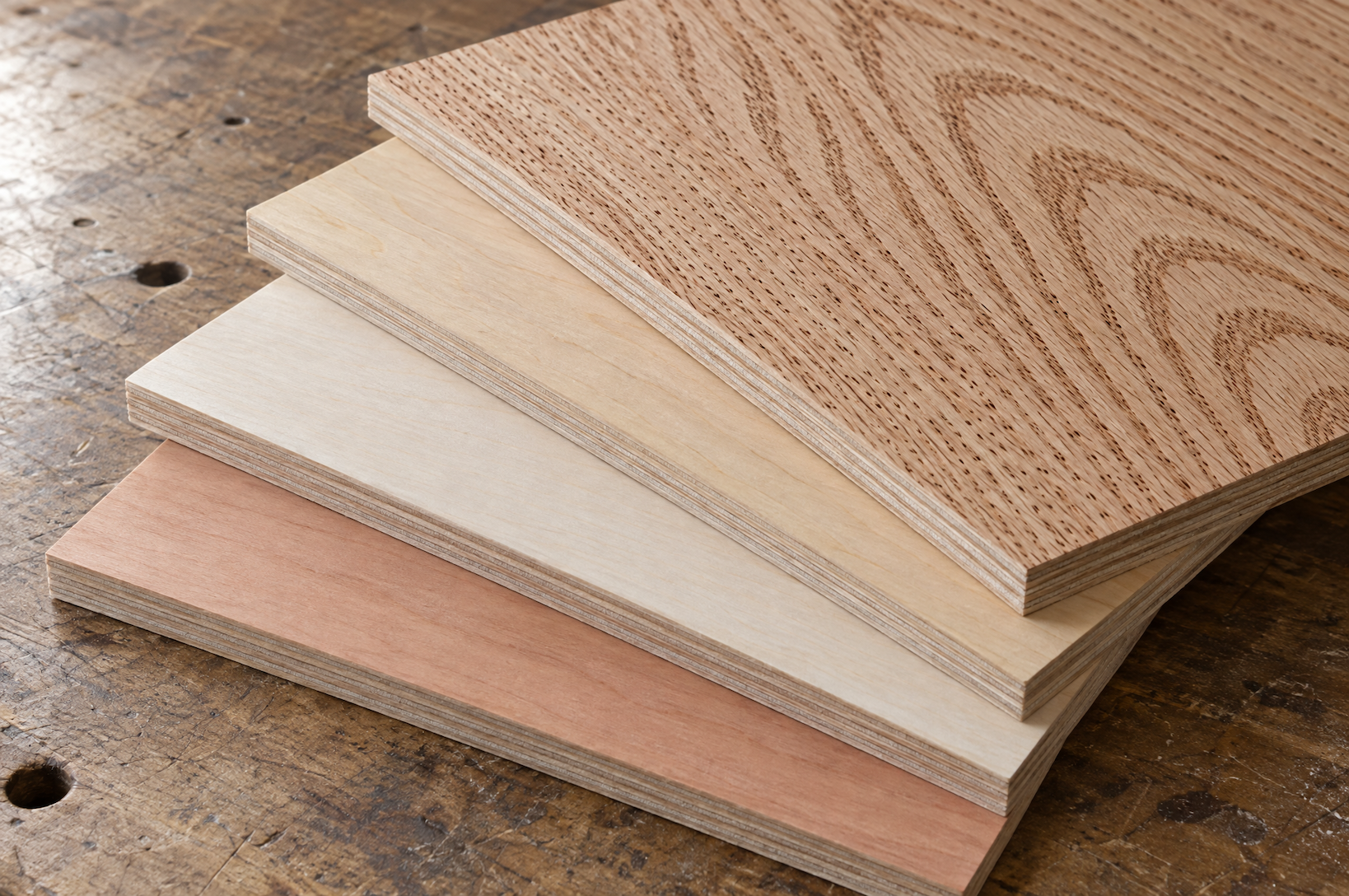
Sheet goods are the least glamorous thing in a lumber yard and the easiest to get wrong. They all arrive as flat four by eight panels, they all stack in the same rack, and to an untrained eye several of them look interchangeable.
They are not. Putting the wrong panel in the wrong place is one of the more expensive mistakes in a remodel, because the failure usually shows up months later, behind something you have already finished.
At The Moulding Company, we have worked with homeowners, designers, and builders on projects of every size, and the same three products come up constantly: luan, MDF, and Extira. They get confused with each other regularly, and they are about as different as three panels can be.
This guide covers what each one is genuinely good at, where each one fails, and how to pick between them.
What Sheet Goods Are
Sheet goods is the trade term for any engineered panel sold in large flat sheets, as opposed to solid lumber sold as boards.
The category covers plywood, MDF, particle board, melamine, hardboard, and specialty exterior panels. What they share is that they are manufactured rather than sawn, which means they behave more predictably than solid wood and come in far larger pieces than a tree can produce.
Our sheet goods range covers the panels that come up most often in interior and exterior residential work. The three below are the ones people ask about most, and the ones most often specified by the wrong name.
Luan Plywood: Thin, Smooth, and Widely Misused
Luan, also spelled lauan, is a thin tropical hardwood plywood, most commonly a quarter inch thick with a smooth, almost featureless face.
It is light, it is cheap, it cuts with a utility knife and a straightedge, and it bends around a gentle curve without complaint. Those qualities make it genuinely useful for a specific set of jobs.
Where luan works well:
- Backing panels for cabinets and built-ins, where nobody sees the surface.
- Door skins and lightweight hollow-core panel repairs.
- Templates and routing patterns, because it cuts cleanly and costs almost nothing.
- Curved substrates, where its thinness lets it follow a radius.
- Protective covering over finished floors during construction.
- Craft, model, and scenery work of every kind.
You can see current sizes and pricing on our luan plywood page.
The Luan Underlayment Warning
This deserves its own section, because it is the single most common luan mistake and it is expensive to undo.
Luan has been used for decades as underlayment beneath vinyl and resilient flooring. It is smooth, it is thin, and it is cheap, so the logic is obvious.
The problem is that many flooring manufacturers now explicitly exclude luan as an approved underlayment, and installing it can void the flooring warranty. The reasons are consistent across manufacturers: luan is made with interior glue that fails when wet, the face veneer can telegraph through thin vinyl, and the species and quality vary considerably from sheet to sheet.
If you are installing new flooring, read the manufacturer instructions before buying underlayment, not after. Most now specify a rated plywood underlayment or a purpose-made cement board or fibre panel.
Use luan for what it is good at. Underlayment is no longer on that list.

MDF: The Painter’s Panel
MDF, or medium density fibreboard, is made by breaking wood down into individual fibres and pressing them back together with resin under heat and pressure.
The result has no grain and no voids. It is the same material all the way through, in every direction. That single property explains almost everything MDF is good at.
Because there is no grain, a routed edge comes out crisp and consistent instead of tearing out. Because there are no voids, the face is dead flat and takes paint better than any plywood will. Because it is engineered, a sheet is a sheet, with none of the cupping or twist you get in solid stock.
That is why nearly every painted moulding profile, every painted cabinet door panel, and most painted built-ins in modern construction are MDF. It is not a budget substitute in those applications. It is genuinely the better material.
Our MDF sheets come in a range of thicknesses, and we also carry it as ready-made MDF beadboard panelling.
Where MDF Fails
MDF has one serious weakness and two practical ones. Knowing them is what keeps it out of the wrong room.
It swells when wet, and the swelling is permanent. Water enters the fibres, the panel expands, and it does not return to size when it dries. A saturated MDF edge stays bloated for the rest of its life. This is the reason MDF has no place in a shower surround, a laundry with a floor drain, or anywhere outdoors.
It is heavy. A three quarter inch four by eight sheet is genuinely awkward for one person. Plan for that before it arrives.
It splits if you fasten it carelessly. There is no grain to grip a screw, and driving one near an edge without pre-drilling will break the panel apart. Pre-drill, and keep fasteners away from the edges.
None of this rules MDF out of a bathroom. It rules out installing it carelessly in one. Seal every cut edge, keep the bottom edge clear of the floor, and prime the back as well as the face. Our comparison of MDF and wood trim goes further into that trade-off.
Extira: The Panel That Solves the MDF Problem
Extira is a treated composite panel that machines like MDF but is rated for exterior exposure.
It is made through a similar fibre-and-resin process, with treatment applied during manufacture rather than as a surface coating. That distinction matters. Because the treatment runs through the panel rather than sitting on it, a cut edge is as protected as the face, which is exactly where ordinary MDF fails.
What that buys you is the best quality of MDF, a dead flat paintable surface that routs crisply, in places where MDF cannot go. Exterior trim, soffits, covered porch ceilings, signage, and column wraps.
It costs meaningfully more than standard MDF, and for interior work that premium buys you nothing. Use it where moisture is the deciding factor and nowhere else. Current sizes are on our Extira page.
One habit worth keeping even so: prime and paint all six faces, including the cuts. Exterior rated is not the same as maintenance free.
Hardwood Plywood: Alder, Birch, Maple and Red Oak
When the panel will be stained or clear finished rather than painted, MDF is the wrong answer and hardwood plywood is the right one.
These are plywood panels faced with a real hardwood veneer, so they show genuine grain while keeping the stability of a manufactured sheet. We stock four species, and each has a distinct personality:
- Birch. Pale, tight, and even. The most economical of the four and a common choice for painted or lightly finished cabinet interiors.
- Maple. Very pale and extremely fine grained. Modern and clean, though it can blotch under stain unless conditioned first.
- Alder. Warm and soft toned, with more character in the grain. Popular for rustic and Craftsman cabinetry.
- Northern red oak. Strong open grain and a warm cast. The traditional choice, and the right one when matching existing oak work.
If you are matching new panels to existing solid trim, bring a sample of the trim rather than a photograph. Species identification from a photo is unreliable, and the wrong guess is visible for the life of the cabinet.

Melamine and Prefinished Panels
Melamine is a particle board or MDF core with a hard resin-impregnated surface bonded to both faces.
The appeal is that it arrives finished. No priming, no painting, no sealing, and a surface that wipes clean and resists scratching. That makes it the standard choice for closet interiors, garage shelving, utility cabinets, and anywhere function matters more than warmth.
The trade-off is that the surface cannot be repaired. A chip in melamine is permanent, and edges need banding or they show the core. Cut it with a fine-tooth blade and score the cut line first, or the surface will chip along the edge.
Thickness, Sheet Size, and How Much to Order
Nearly all of these panels come as four by eight sheets. Thickness is where the decisions are.
- Quarter inch. Backing panels, templates, curved substrates, cabinet backs. This is luan territory.
- Half inch. Light shelving, panel inserts, drawer bottoms, wainscot substrate.
- Three quarter inch. The default for cabinet carcasses, shelving that must not sag, and structural panel work.
Two ordering habits save money. Order in whole sheets and plan your cuts before you buy, because a badly planned cutting list turns three sheets into four. And add roughly ten percent for waste, more if the panel has a directional grain you need to keep running the same way.
If you need solid stock rather than panels for the same job, our boards range covers 1x, 5/4x and 2x material.
Cutting and Fastening Each One
Each panel wants slightly different handling.
Luan cuts with a sharp utility knife and a straightedge for straight lines, or a fine-tooth blade for anything else. Support it fully, because it flexes and will tear if it sags mid-cut.
MDF blunts blades quickly and produces very fine dust, which is the real hazard. Wear a proper respirator, not a paper mask, and cut outdoors or with extraction if you can. Pre-drill every fastener.
Extira handles like MDF on the saw. Seal the cuts as you go rather than at the end, particularly on anything heading outdoors.
Hardwood plywood tears out on the exit face. Score the cut line first, use a fine-tooth blade, and put the good face down on a circular saw or up on a table saw.
Matching the Panel to the Job
The short version, if you remember nothing else:
- Painted interior trim, cabinet panels, built-ins: MDF.
- Anything painted that goes outside or gets wet: Extira.
- Stained or clear finished cabinetry: hardwood plywood, species matched.
- Hidden backing, templates, curves, floor protection: luan.
- Closets, garage shelving, utility storage: melamine.
- New flooring underlayment: none of the above. Read the flooring manufacturer instructions.
Common Mistakes
- Using luan as flooring underlayment and voiding the flooring warranty.
- Putting standard MDF anywhere it can meet standing water.
- Driving screws into MDF near an edge without pre-drilling, then wondering why the panel split.
- Paying the Extira premium for interior work that will never see moisture.
- Choosing MDF for a piece that will be stained. It has no grain to show.
- Cutting melamine with a coarse blade and chipping the surface along every edge.
- Cutting MDF without a respirator.
How We Help Customers Choose at The Moulding Company
When someone comes to the counter for sheet goods, we ask two questions before anything else. Is it getting painted or stained, and will it ever get wet?
Those two answers eliminate most of the catalogue immediately. Painted and dry means MDF. Painted and wet means Extira. Stained means hardwood plywood, and then we talk species. Hidden means luan, and we can usually save the customer money.
We also ask what the panel is being fastened to and how it is being cut, because the right panel installed with the wrong method fails just as reliably as the wrong panel.
Across our four Bay Area showrooms, we keep offcuts of each panel on hand. Feeling the difference between MDF and Extira on a cut edge takes about two seconds and explains the price difference better than any description.
Final Thoughts
Sheet goods reward a small amount of upfront thinking more than almost any other material in a project.
The panels look similar in the rack and behave completely differently once installed. Luan is a thin utility panel with a specific job list. MDF is the best painted surface available, provided it stays dry. Extira is MDF that can handle weather, at a price that only makes sense outdoors.
At The Moulding Company, we would rather spend five minutes at the counter matching the panel to the job than see a customer back in six months with a swollen edge. The right sheet costs very little more than the wrong one.
Frequently Asked Questions (FAQs)
Luan is a thin tropical hardwood plywood used for cabinet backing, door skins, routing templates, curved substrates and temporary floor protection. It is light, smooth and inexpensive, but it is not structural and not moisture resistant.
Many flooring manufacturers now exclude luan as an approved underlayment, and using it can void the flooring warranty. Check the flooring manufacturer instructions before buying, and expect to be directed toward a rated plywood underlayment or a purpose-made fibre or cement panel instead.
Both are engineered fibre panels that machine the same way, but Extira is treated through the panel during manufacture so it is rated for exterior exposure. Standard MDF swells permanently when it gets wet and should stay dry and indoors.
No. Plywood is stronger in bending and holds fasteners far better, because it has cross-laminated grain. MDF wins on surface quality, machining crispness and paint finish, which is why it dominates painted trim and cabinet panels rather than structural work.
MDF, provided the cabinets stay dry. It has no grain to telegraph through paint, routs crisply, and gives a flatter painted finish than any plywood. For a bathroom or laundry, seal every cut edge and keep the bottom edge clear of the floor.
