



Blog
When to Replace Interior Trim During a Remodel


Remodeling a home is full of big decisions. Flooring, cabinets, paint colors, lighting, layout changes. In the middle of all that, interior trim is often treated as secondary. Many homeowners assume trim can simply stay in place while everything else changes around it.
At The Moulding Company, we’ve seen how that assumption can either save money or quietly limit the entire remodel. Interior trim plays a powerful role in how finished a space feels. During a remodel, it is often the detail that determines whether the final result looks cohesive or pieced together.
So when should you replace interior trim during a remodel, and when can you keep what you have? The answer depends on condition, proportion, style, and the scope of the renovation.
Let’s break it down.
Trim Is Not Just Decorative
Before deciding whether to replace trim, it helps to understand what it actually does.
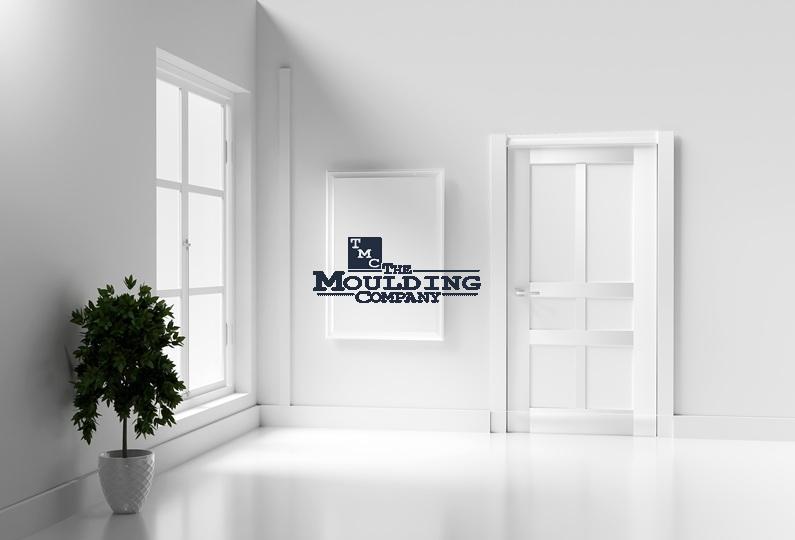
Baseboards protect walls from impact. Door and window casings frame openings and hide construction gaps. Crown moulding softens transitions between walls and ceilings. Wall trim and specialty moulding add architectural depth.
Trim is both functional and architectural. When you remodel flooring, doors, cabinetry, or wall layout, trim becomes part of that structural equation. Ignoring it can create subtle mismatches that are hard to fix later.
Replace Trim When Flooring Is Being Changed
One of the clearest times to consider replacing trim is during a flooring update.
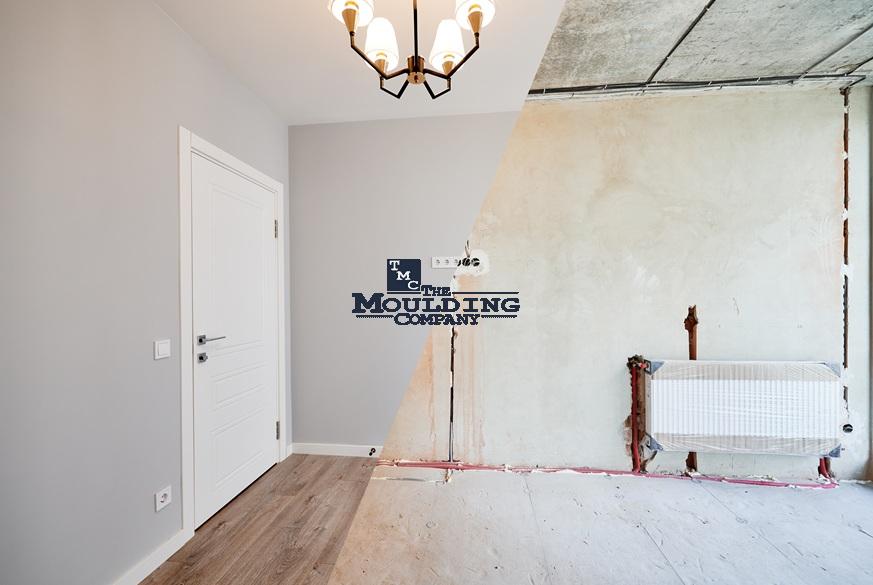
When old flooring is removed, baseboards are often damaged or left with visible height differences. If the new flooring is thinner or thicker than the previous material, gaps may appear. Shoe moulding can sometimes cover minor differences, but it is not always the right solution.
If you are upgrading from carpet to hardwood, tile, or luxury vinyl plank, new baseboards often provide a cleaner finish. They allow proper alignment and eliminate the need for patchwork repairs.
A remodel is the easiest time to replace baseboards because the room is already disrupted. Waiting until later means pulling them off after everything is finished, which is more complicated and costly.
When flooring thickness changes, upgrading your interior baseboard moulding options often results in a cleaner transition.
Replace Trim When Doors Are Being Updated
New doors can make existing trim look dated very quickly.
If you upgrade from hollow-core doors to solid panel doors, or change the door style entirely, existing casings may feel undersized or stylistically disconnected. Even if the trim is technically in good condition, proportion and design may no longer align.
When door styles change significantly, replacing interior door and window casings often elevates the entire look. It ensures doors feel intentional rather than retrofitted into older trim.
This is especially true when moving from traditional to modern design, or vice versa.
Replace Trim When Ceiling Height Perception Changes
Sometimes a remodel includes removing soffits, raising ceilings, or opening up walls. When wall proportions change, trim should be reevaluated.
Baseboards that felt fine before can suddenly look too small against taller walls. Crown moulding may feel undersized or visually disconnected.
Trim should always relate to ceiling height. If the remodel alters the visual scale of the room, trim often needs updating to maintain balance.
Replace Trim When There Is Visible Damage
This seems obvious, but it is frequently overlooked.
Common issues include:
- Water damage or swelling
- Cracked joints
- Warped sections
- Excessive nail holes or patch repairs
- Poor previous installation
Minor cosmetic flaws can be repaired. However, if trim has widespread damage or inconsistent repairs throughout the home, replacement may provide a cleaner and more cost-effective long-term solution.
A remodel is an opportunity to reset rather than patch.
Replace Trim When You Are Changing Design Style
Style shifts are one of the biggest indicators that trim should be replaced.
For example:
- Moving from ornate traditional to modern minimal
- Updating a dated 1990s profile to a cleaner transitional look
- Converting a builder-grade interior into something more custom
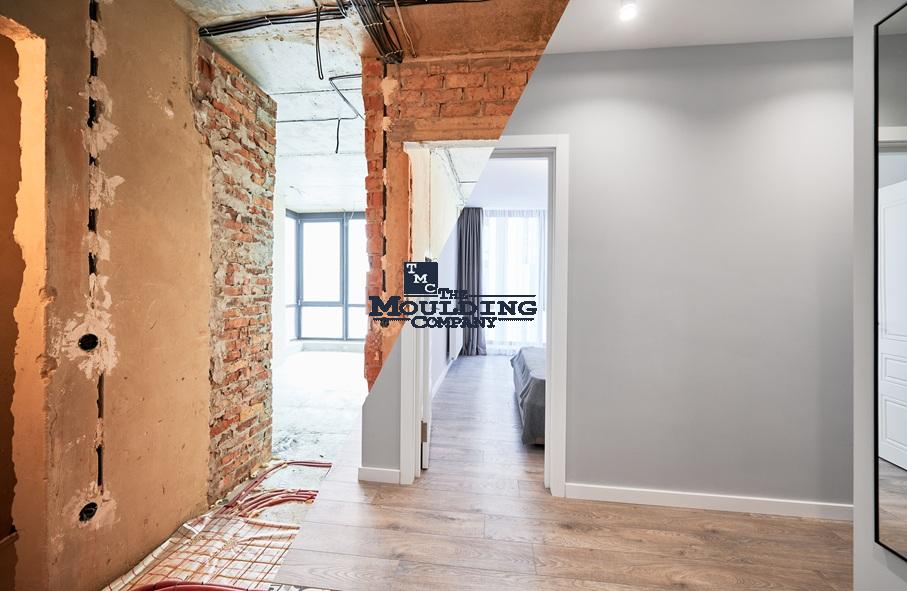
Trim profiles strongly influence architectural identity. Keeping outdated baseboards or crown moulding in a fully renovated room can make the space feel partially updated rather than complete.
When the design direction changes significantly, trim often needs to follow.
Replace Trim When Layout Changes Occur
Removing walls, adding openings, or reconfiguring rooms almost always affects trim continuity.
When walls are removed, existing trim heights and profiles may no longer line up. New openings require new casings. Matching older trim exactly can be difficult, especially if profiles are discontinued.
In these situations, replacing trim throughout the affected area ensures consistency and avoids awkward transitions.
When You Can Keep Existing Trim
Not every remodel requires full trim replacement.
You can often keep existing trim if:
- It is structurally sound
- The profile still fits the new design
- Flooring thickness remains similar
- Doors are not being changed significantly
- The trim height is proportional to the ceiling
In cosmetic remodels such as repainting walls or updating lighting, keeping trim can make sense. Sometimes repainting existing trim is all that is needed to refresh a space.
The key is honest evaluation rather than automatic replacement or automatic preservation.
Partial Replacement vs Full Replacement
Sometimes only certain trim elements need updating.
For example, you may replace baseboards while keeping crown moulding. Or update casings while preserving taller architectural trim in formal spaces.
However, mixing old and new trim requires careful coordination. Profiles, heights, and finishes must align closely. Otherwise, the difference becomes obvious.
When in doubt, replacing trim consistently across connected spaces often produces a cleaner final result.
The Cost Perspective
Many homeowners hesitate to replace trim because it feels like an added expense. But trim replacement during a remodel is often more affordable than people expect, especially compared to cabinetry or flooring.
More importantly, trim significantly affects perceived quality. Saving on trim while investing heavily elsewhere can unintentionally lower the overall impact of the remodel.
Replacing trim during construction is also more efficient than doing it later. Labor costs are typically lower when walls and floors are already in progress.
Coordination Matters
Remodeling projects often involve multiple trades working at once. Trim decisions should be coordinated early in the planning process.
For homeowners planning renovations, evaluating trim alongside flooring and doors prevents last-minute compromises.
For contractors managing full remodels, trim replacement decisions influence sequencing, installation timing, and overall finish quality.
When trim is part of the plan from the beginning, the results are more cohesive.
How We Approach Remodel Trim Decisions
At The Moulding Company, we encourage customers to step back and look at the entire remodel rather than focusing on individual components.
We consider:
- Ceiling height and room scale
- Flooring thickness and material
- Door style and proportion
- Overall architectural direction
- Condition of existing trim
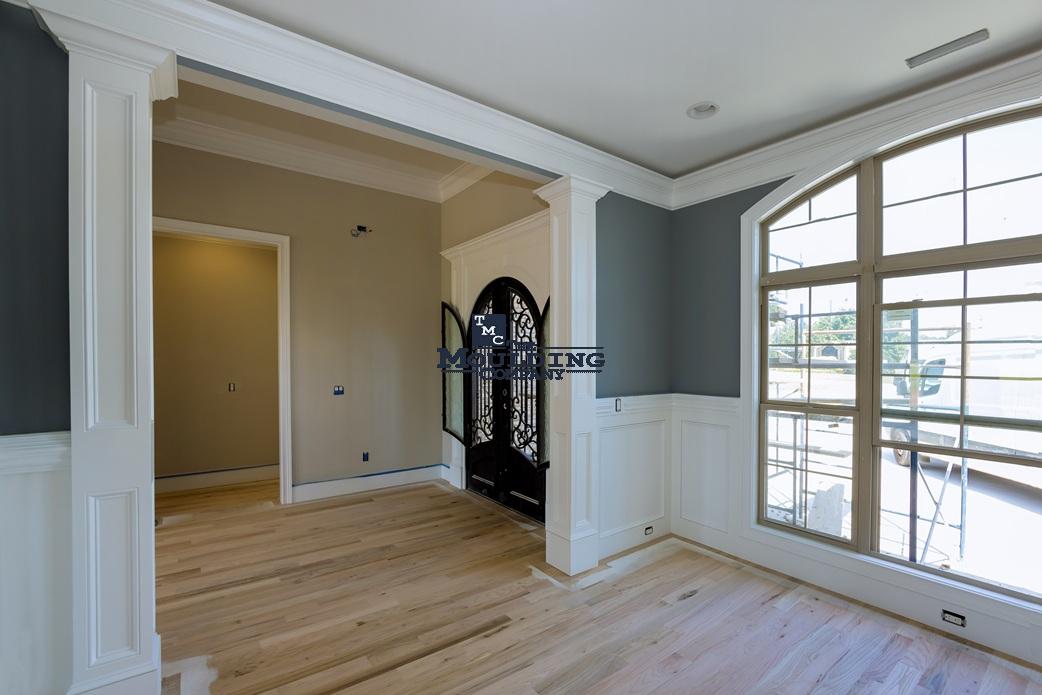
Sometimes the right choice is a full trim update. Other times, selective replacement or refinishing makes more sense. The goal is always to create balance and consistency across the space.
Final Thoughts
So when should you replace interior trim during a remodel?
Replace it when flooring changes create alignment issues. Replace it when doors are upgraded significantly. Replace it when proportions no longer match the ceiling height or when the style direction shifts dramatically. Replace it when existing trim is damaged beyond simple repair.
Keep it when it is structurally sound, stylistically aligned, and proportional to the updated space.
Interior trim may not be the headline feature of a remodel, but it is often the detail that determines whether the final result feels complete. When trim is evaluated thoughtfully during a renovation, the entire home benefits.
At The Moulding Company, we believe remodeling is an opportunity to refine not just surfaces, but structure. Trim is part of that structure, and getting it right makes all the difference.
Frequently Asked Questions (FAQs)
In many cases, yes. Changing flooring thickness or material can leave gaps or misalignment, and replacing baseboards often creates a cleaner, more professional finish.
If the new doors differ significantly in style or proportion, updating the door casings helps maintain consistency and visual balance.
Trim can be reused if it is in good condition, proportional to the ceiling height, and aligned with the updated design style.
It is usually more cost-effective to replace trim during a remodel while walls and floors are already being worked on.
Well-proportioned, cohesive trim improves perceived craftsmanship and can positively influence resale appeal.