



Blog
Common Trim Mistakes Homeowners Make (and How to Avoid Them)


At The Moulding Company, we’ve seen firsthand how much trim can transform a home. The right baseboards, crown moulding, and casings quietly elevate a space. The wrong decisions, however, can make even a beautiful room feel slightly off. Trim may seem like a small detail compared to flooring, cabinetry, or paint, but it has a powerful effect on proportion, flow, and perceived quality.
Most trim mistakes are not dramatic. They are subtle. A profile that is slightly too small. A height that does not match the ceiling. A finish that clashes with the flooring. Individually, these choices might not seem significant, but together they can undermine the overall design.
The good news is that these mistakes are completely avoidable. With a little planning and a clear understanding of proportion and consistency, trim can become one of the strongest design features in a home.
Choosing Trim That Is Too Small for the Space
One of the most common mistakes homeowners make is selecting trim that is undersized for their ceilings and room dimensions. This often happens when people default to what feels “standard” without considering scale.
In a home with nine or ten foot ceilings, short baseboards can look lost against tall walls. The room may feel unfinished, even if the flooring and furniture are well chosen. Similarly, thin casings around doors can make openings feel weak or visually disconnected from the wall.
The solution is to think proportionally. As ceiling height increases, trim height should increase as well. Baseboards should feel like they anchor the wall. Casings should frame doors confidently. Crown moulding should relate to ceiling height rather than feel like an afterthought.
Trim does not need to be oversized, but it should feel intentional and scaled to the architecture.
Mixing Too Many Trim Styles
Another frequent mistake is mixing unrelated trim profiles throughout the home. A modern flat baseboard paired with ornate crown moulding, or decorative casings combined with ultra-minimal door frames, can create visual confusion.
Each trim element does not need to match exactly, but they should belong to the same design family. Flat, clean lines work well together. Stepped, slightly detailed profiles also coordinate well. Heavily curved traditional moulding pairs best with similarly detailed trim elements.
When trim styles clash, the eye senses inconsistency even if the materials are high quality. Cohesion matters more than complexity.
Ignoring Ceiling Height When Choosing Crown Moulding
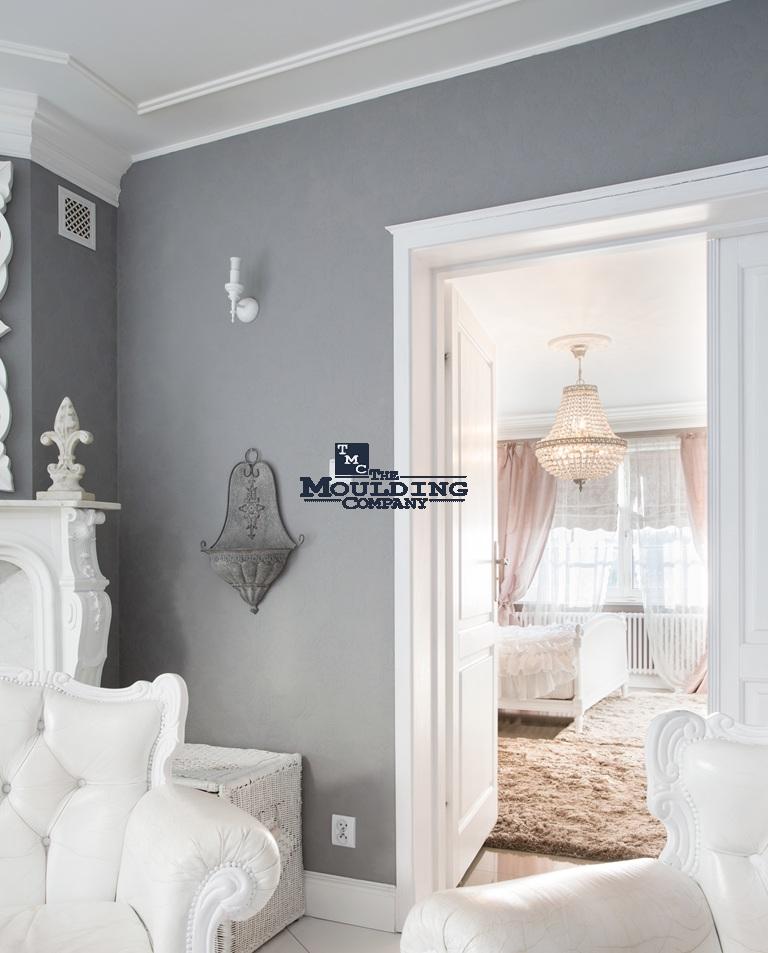
Crown moulding is one of the most misunderstood trim elements. Many homeowners either skip it entirely or choose a profile that is too large or too small for the ceiling height.
In rooms with standard eight foot ceilings, oversized crown moulding can make the ceiling feel lower. In taller rooms, tiny crown moulding can look insignificant and disconnected.
Crown moulding should feel like a natural extension of the architecture. The profile depth and height should relate to the wall height. Even subtle crown moulding, when sized correctly, can add refinement without overpowering the space.
Changing Trim Heights From Room to Room Without a Plan
Consistency is one of the most important principles in interior trim design. Abrupt changes in baseboard height from one room to another can make transitions feel awkward.
While there are situations where trim height should vary, such as between floors with different ceiling heights, changes should feel intentional. On the same level of a home, baseboards are usually best kept at a consistent height. Casings should also maintain similar proportions throughout.
When trim shifts unpredictably, the house can feel pieced together rather than cohesive.
Choosing the Wrong Finish for the Space
Finish is just as important as profile and height. Painted trim and stained trim create very different visual effects.
Painted trim often provides flexibility and works well in modern and transitional homes. Stained trim highlights wood grain and can feel more traditional or craftsman in style.
Problems arise when the finish does not relate to flooring and doors. For example, mismatched wood tones between trim and floors can create visual tension. Highly contrasting painted trim may divide the room visually rather than unify it.
Before committing to a finish, it helps to consider how trim will interact with:
- Flooring color and texture
- Door style and finish
- Cabinetry tones
- Overall wall color
When these elements work together, the result feels intentional rather than accidental.
Forgetting About Door and Window Casings
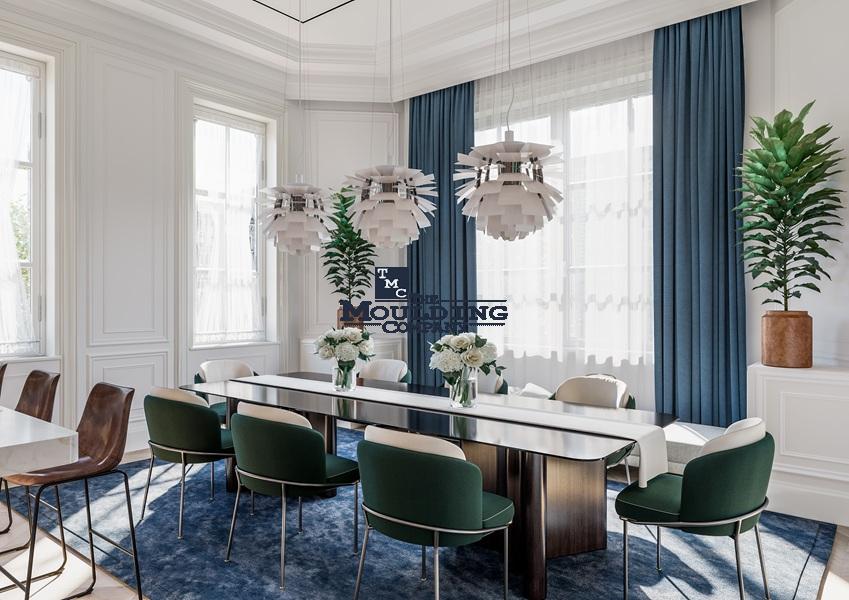
Baseboards and crown moulding often receive most of the attention, but casings play an equally important role. Door and window trim frames every opening in the home. If casings are too narrow, too decorative, or inconsistent, they stand out in the wrong way.
Casings should feel strong enough to frame openings without competing with other trim. Their width should relate to baseboard height. Their profile should align with the overall style of the home.
Ignoring casings while upgrading baseboards or crown moulding often leads to imbalance.
Well-scaled interior door and window casings help maintain consistency throughout the home.
Installing Trim Before Finalizing Other Finishes
Another mistake we frequently see is selecting and installing trim before flooring, doors, or cabinetry are fully decided. Trim interacts closely with all of these elements. Choosing it too early can create limitations later.
For many homeowners, planning trim as part of a complete interior package helps avoid costly changes. Coordinating proportions and finishes from the start leads to better results.
For larger builds and remodels, contractors often approach trim as part of a broader design system, ensuring consistency across rooms and levels.
Overusing Decorative Profiles in Small Rooms
Detail can be beautiful, but too much of it in a small room can feel overwhelming. Heavy crown moulding, ornate baseboards, and layered profiles may work well in large formal spaces, but they can crowd compact rooms.
In smaller bedrooms, bathrooms, and hallways, simpler trim profiles often feel more appropriate. Clean lines keep the space feeling open and balanced.
Trim should enhance the room, not dominate it.
Treating Trim as an Afterthought
Perhaps the most common mistake is treating trim as something to choose at the very end of a project. When trim is an afterthought, decisions are rushed. Proportions are guessed. Consistency is overlooked.
Trim deserves the same level of planning as flooring or cabinetry. It connects everything together. When thoughtfully chosen, it elevates the entire home.
How to Avoid These Mistakes
Avoiding trim mistakes comes down to a few key principles:
- Think in terms of proportion, not just measurements
- Keep styles consistent throughout the home
- Match trim scale to ceiling height
- Coordinate finishes with flooring and doors
- Plan trim as part of the overall design, not separately
At The Moulding Company, we help customers step back and look at the full picture. Instead of focusing on a single piece of moulding, we consider how baseboards, crown moulding, casings, and other trim elements work together across the home.
Final Thoughts
Trim may not always be the first thing people notice when they enter a room, but it shapes how the space feels. When proportions are right and styles are consistent, rooms feel finished and well designed. When trim decisions are rushed or mismatched, something feels incomplete.
The most common trim mistakes are not dramatic errors. They are small decisions that accumulate. By approaching trim with intention and planning, homeowners can avoid those pitfalls and create spaces that feel cohesive and refined.
At The Moulding Company, we believe thoughtful trim design is one of the simplest ways to elevate a home. With the right proportions, profiles, and finishes, trim becomes the detail that quietly brings everything together.
Frequently Asked Questions (FAQs)
The most common trim mistake is choosing baseboards or crown moulding that are too small for the ceiling height. Undersized trim often makes rooms feel unfinished.
Trim does not need to be identical, but it should belong to the same style family. Mixing unrelated profiles can make a home feel inconsistent.
Yes. Trim height affects proportion and balance. Baseboards and crown moulding should relate to ceiling height and room size.
Neither is better universally. Painted trim offers flexibility and a clean look, while stained trim highlights natural wood and works well in traditional interiors.
Yes. Well-proportioned and cohesive trim improves perceived quality and craftsmanship, which can positively influence resale appeal.