



Blog
Choosing the Right Trim for Living Rooms and Dining Areas


At The Moulding Company, we often see living rooms and dining areas treated as the centerpiece of a home, yet trim decisions in these spaces are sometimes rushed or overlooked. Flooring, furniture, and lighting tend to get most of the attention, but trim is what quietly ties everything together.
When trim is chosen correctly, these rooms feel balanced, finished, and intentional. When it is not, something feels slightly off, even if everything else is well designed. Living rooms and dining areas are where trim has the most visual impact because they are open, visible, and used frequently.
Choosing the right trim for these spaces is less about trends and more about proportion, style, and how each element works together.
Why Trim Matters More in Living and Dining Spaces
Living rooms and dining areas are often the most open and connected parts of a home. These are the spaces where people gather, entertain, and spend time daily. Because of that, visual consistency becomes more important.
Trim defines the edges of the room. Baseboards anchor the walls. Casings frame doors and transitions. Crown moulding, when used, shapes the ceiling line. These elements repeat across the space, creating a rhythm that either feels cohesive or disconnected.
Unlike bedrooms or smaller rooms, mistakes in trim are more noticeable here because there is more visibility and fewer visual interruptions.
Trim is not just decoration. It is structure for the way we experience a room.
Start With the Scale of the Room
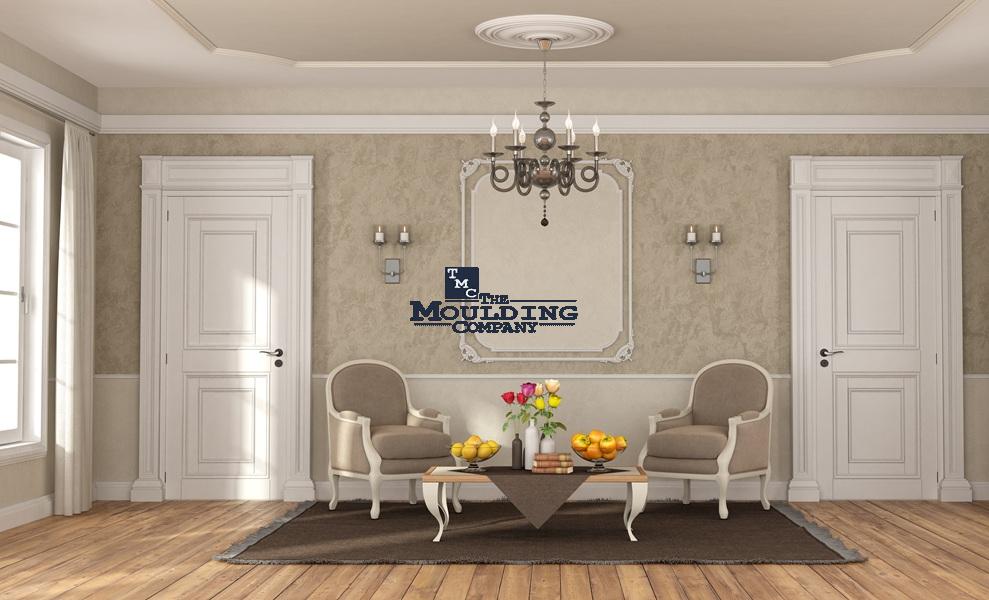
Before choosing trim profiles or styles, it helps to step back and look at the size of the room and the ceiling height.
In living rooms and dining areas with standard ceilings, trim should feel balanced but not overpowering. In larger spaces or homes with higher ceilings, trim needs more presence to avoid feeling undersized.
A helpful way to think about it is this: trim should match the scale of the room, not just the style.
If the room feels large and open, slightly taller baseboards and more defined profiles help create structure. If the room is smaller or more compact, simpler trim keeps the space feeling open.
Baseboards: The Foundation of the Room
Baseboards are one of the most important trim elements in both living rooms and dining areas. They run continuously along the walls, making them one of the first things the eye picks up, even subconsciously.
In most living spaces, baseboards in the medium to tall range create a strong visual foundation. They help ground the room and connect the walls to the flooring in a clean, intentional way.
Choosing the right baseboard moulding styles can make a noticeable difference. Clean, well-proportioned baseboards help the room feel finished without drawing unnecessary attention.
In more modern spaces, flat or slightly stepped profiles tend to work best. In more traditional or formal dining areas, slightly more detailed profiles can add character without overwhelming the space.
Crown Moulding: Defining the Ceiling Line
Crown moulding is not required in every living room or dining area, but when used correctly, it can elevate the space significantly.
In dining rooms, crown moulding is often more common because these spaces tend to lean slightly more formal. In living rooms, the choice depends on ceiling height and overall style.
The key is restraint. Crown moulding should feel like a natural extension of the room, not a decorative add-on.
Choosing subtle and well-proportioned crown moulding styles helps define the ceiling line while maintaining balance. Oversized or overly detailed profiles can make ceilings feel lower, especially in rooms with standard height.
Painting crown moulding to match the ceiling is another way to keep the effect clean and cohesive.
Casings: Framing the Room’s Openings
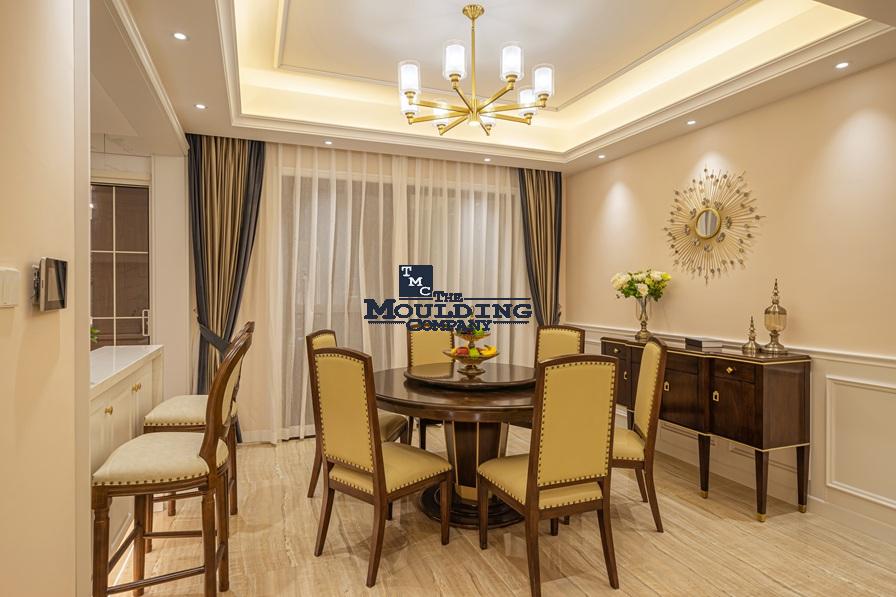
Doorways and transitions are especially important in living rooms and dining areas because these spaces often connect to multiple parts of the home.
Casings help define these openings and keep them visually consistent. Without well-proportioned trim, doors and openings can feel disconnected from the walls.
Using consistent interior door and window casings ensures that every transition feels intentional. Casings should relate to baseboards in both height and style so that the room feels unified.
In open layouts, this becomes even more important. When multiple doorways are visible at once, inconsistent trim stands out immediately.
Balancing Formal and Casual Elements
One of the challenges in living rooms and dining areas is balancing formality and comfort.
Dining rooms often lean more formal, which allows for slightly more structured trim. Living rooms, especially in modern homes, tend to feel more relaxed.
The solution is not to treat them as completely separate spaces, but to let trim act as a bridge between the two.
For example, baseboards can remain consistent across both rooms, while crown moulding or wall details are slightly more pronounced in the dining area. This creates variation without breaking cohesion.
Trim is not just decoration. It is structure for the way we experience a room.
Choosing the Right Finish
Finish plays a major role in how trim is perceived.
Painted trim is the most common choice in living and dining spaces because it creates a clean, consistent look. It also allows flexibility when coordinating with flooring and furniture.
Stained trim can work beautifully in traditional or craftsman-style homes, especially when paired with wood flooring and doors. However, it requires more careful coordination to avoid mismatched tones.
Many homeowners consider painted vs stained trim when deciding how much contrast or warmth they want in these spaces.
How Trim Works With Flooring and Furniture
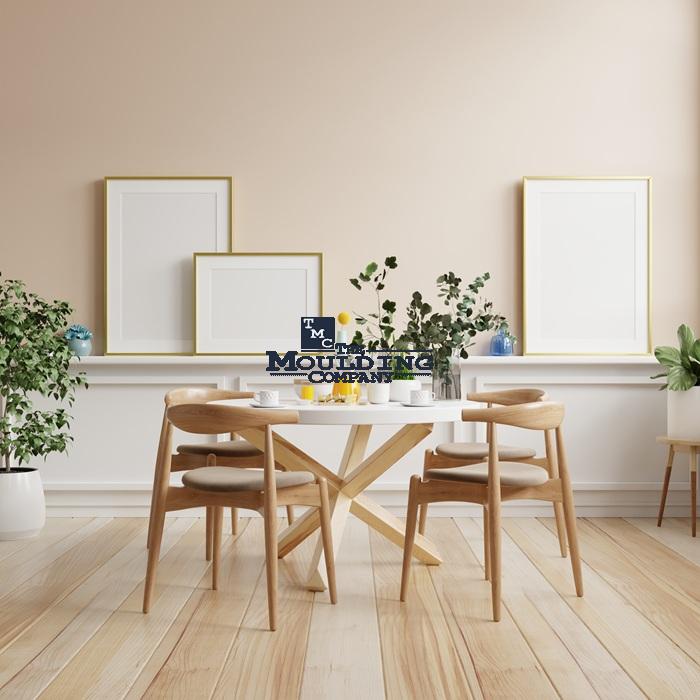
Living rooms and dining areas often feature prominent flooring and large furniture pieces. Trim should support these elements, not compete with them.
If the flooring has strong color or pattern, simpler trim helps balance the room. If the flooring is neutral, trim can carry slightly more visual weight.
Furniture scale also matters. Large dining tables or sectional sofas pair well with slightly taller trim because they share a similar visual presence.
Common Mistakes in Living and Dining Rooms
We often see a few recurring issues in these spaces.
One is choosing trim that is too small, especially in larger rooms. This can make walls feel unfinished.
Another is mixing trim styles between connected spaces, which breaks visual flow.
Overly decorative trim in smaller living rooms can also make the space feel crowded.
Finally, treating trim as an afterthought often leads to mismatched proportions.
Avoiding these mistakes comes down to planning trim as part of the overall design rather than as a final detail.
How We Help at The Moulding Company
At The Moulding Company, we approach living rooms and dining areas as connected spaces rather than isolated rooms. We help customers choose trim that works across both areas while respecting how each space is used.
By focusing on proportion, consistency, and style alignment, we help ensure trim enhances the room rather than competing with it.
Trim is not just decoration. It is structure for the way we experience a room.
Final Thoughts
Choosing the right trim for living rooms and dining areas is about balance. These spaces are where trim has the most visibility, which means it has the greatest opportunity to improve how a home feels.
Baseboards ground the room. Casings define transitions. Crown moulding, when used, completes the space. When these elements are chosen thoughtfully, they create a sense of structure and cohesion that ties everything together.
At The Moulding Company, we believe great trim should not feel like an add-on. It should feel like it was always part of the home.
Frequently Asked Questions (FAQs)
Living rooms usually benefit from medium to tall baseboards and simple, well-proportioned trim that creates balance without overwhelming the space.
Dining rooms can support slightly more detailed trim, but it should still match the overall style of the home to maintain consistency.
Not always. Crown moulding can enhance the space, but it should be proportional to ceiling height and kept simple in smaller rooms.
Yes. Trim should remain consistent between connected spaces to maintain visual flow and cohesion.
Painted trim in neutral tones works in most homes, while stained trim is better suited for traditional or wood-focused interiors.